

How To Set Up Snare Drum
Updated on April 3rd, 2022
In the percussion family unit, the snare pulsate is an instrument that is considered a main part of the pulsate kit and is used in several bands. Typically, the snare pulsate is played with a drumstick and tin can be used in concert bands, marching bands, parades, drumlines, and popular music and rock bands. The snare drum is the smallest cylinder drum and is often referred to as the side drum. The snare drum is derived from a pulsate that was originally used to accompany a flute, the tabor . There are two heads on the snare drum, and they are nigh commonly fabricated of plastic, but some are fabricated of calfskin. 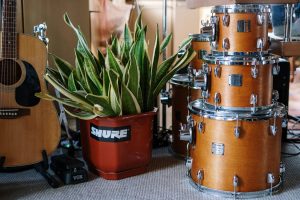
What Are the Parts of a Snare Pulsate?
Caput
The head is the surface of the snare drum which drummers strike, and the snare-side head is called its contrary side. Coated-concoction heads for modern snare drums are ordinarily used as materials.
Hoops and Rims
Hoops or rims are what tin exist seen around the head of the snare, and it holds information technology all together. The other snare sections that dictate the audio of the entire instrument are also housed in the Rims.
What you tin can find on near snare drums today are dice-cast and triple-flange metal hoops. Aside from aesthetics, at that place are a few variations betwixt the two. Die-cast hoops, particularly for noisy rimshots, provide a more robust feel. They often announced to reduce the ring of the pulsate and create fewer overtones.
In comparison, triple-flange hoops tin make it possible for the drum to ring longer, create more overtones, and produce greater sensitivity to the snare. Depending on the characteristics of the shell, manufacturers often match hoops to trounce designs, merely it's essentially a matter of personal preference.
Shell
Shells give the round appearance of snare drums, and they typically have an influence on the sound that the snare makes. The material used for the shell frequently factors into the consistency of the audio.
While most wood shells are produced by estrus and compression from multiple thin plies moulded into a rigid shell, others are made from a single dense, steam-bent ply. To shape the shell, some custom pulsate makers often use staves, or forest segments, which are glued together.
The top and bottom of thinner shells are often attached to reinforcement rings and may be synthetic from the aforementioned wood species equally the residual of the shell or from a different textile. Looking upwards what kind of snare on a couple of your favourite recordings was used will aid you pin downwards some of the sounds that volition produce dissimilar shells. There are likewise lots of snare-demo videos on YouTube, equally well as on the website of most drum producers
Strainer
This arrangement keeps the snares against the pulsate head's snare-side and provides you, the drummer, with a way to change the wire tension.
Mounting
The well-nigh common mounting choice is the standard three-legged stand up forth with a few sporting alternatives for adding a sling.
Lugs and Tension Rods
These two serve as the drum head's tensioning mechanism, and they ensure that the beat out is touched by less metallic, which affects the consistency of the audio created past the snare. They are located on the shell's sides and are balanced using a drum primal.
Tube lugs have less metallic than split or have long lugs in direct contact with the casing, thereby enhancing sustainability and offering a slightly dissimilar tone. At that place are several innovative carve up-lug designs, and these are peradventure the virtually identifiable visual feature of the drums of a specific manufacturer. Other drumhead tensioning methods, such as rope systems, are used now and then, only for pulsate designers, tension rods are notwithstanding the usual alternative.
Snare Wires
When the head is struck, these delicate wire strands give snare drums their distinct tone. Dissimilar types of wires are also used to produce different sounds. By engaging with the snare-side head when the drum is stuck, these pocket-size, delicate strands give the snare drum its characteristic sound. Ordinarily, drum set snare drums use snares made of coiled wire, often referred to every bit snappy snares. At all dynamic stages, these give the drum a vivid tone, are very sensitive and do non muffle the sustain as much as other wire designs do.  How Does a Snare Drum Work?
With a drumstick or beater that can range from brushes to drummers, the drummer strikes the snare pulsate head. This human action forces the head down, assuasive the transmitted energy to vibrate and disperse until it is completely prodigal by audio waves. By altering the sound depending on the intensity of the strength and the corporeality of stress under which the snare wires are, the snare wires answer to this strength. Equally you adjust the corporeality of strength you use on the drumsticks, the sound then changes. Some experienced drummers change the mode they strike the snares to create another sound collection, while another method frequently involves striking 1 of the drumsticks as it lies over the caput of the drum.
Nevertheless, some other technique is to strike the rims or hoops instead of the staccato to create a flat beat.
How to Tune a Snare Drum?
Follow the steps beneath to melody your snare pulsate ideally:
1. Know Your Drum
Understanding your drum is the commencement primary factor behind tuning your snare. Many types of shell will play into how yous terminate up tuning the snare. Hardwoods such as maple, birch, cherry, oak, walnut and mahogany are popular snare materials, besides as alternative materials such as carbon fibre, fibreglass, and acrylic. Metal snare drums go along to be extremely popular: on many of your favourite records, you can hear brass, steel, copper, bronze and aluminium.
For tuning, agreement how the material plays into audio product is of import. Metal-shelled drums, for case, can result in more volume and rings than wood. Various forms of metal can also produce various sounds. Steel is going to be lighter than copper and aluminium is going to exist drier than brass.
2. Rings and Buzzing Sounds
Drummers are also hyper-focused on ring emptying while tuning. Even so, in certain cases, a ring is fine. When miked, Ring works in alive situations. With a more than restricted dynamic range, eliminating the ring would requite the pulsate a very pronounced, concentrated tone. Yet, at a lower frequency, the articulation would exist improved. Comport in listen that the ring volition be absorbed by the ring finally. This is usually referred to as 'sympathetic snare buzz' if yous are hearing a' fizz' sound, which ways that the lesser head of one of your toms is tuned to the aforementioned pitch as your bottom snare head. With speciality snare wires, you lot can minimize this, but don't expect them to salve the day.
3. Drum Heads- Old or New?
Y'all will hear the sound of the drums change as you practise. The more you play, the more than it takes for your drums to be tuned. The drum heads would need to be replaced after prolonged use. The onetime heads are not going to keep the melody likewise, and they're going to wear out and carve up eventually. In that location are a lot of head styles, so what kind of head do you lot use? A dissimilar tone is created by each kind of caput, and some are more robust than others.
four. Drum heads are of the post-obit types:
- Unmarried Ply
The most popular head types are unmarried-ply drum heads. They create a brighter audio and are the sort of caput that is least durable. For jazz and low-cal rock, this blazon of drum caput is fine.
- Double Ply
Double-ply drum heads sound darker and are ideal for heavy metal music, both heavier, louder kinds. They take a darker sound and are more durable.
- Coated
There is a sprayed-on coating on coated pulsate heads that darkens the drum tone and decreases the amount of "ring" or overtones. They're fifty-fifty more resilient than heads that are uncoated, or transparent.
- Pre-dampened
Pre-dampened drum heads have a damping mechanism congenital in to regulate the drum overtones. These are oft referred to equally mufflers and are used on kicking drums most ofttimes. With fewer overtones, they create a very regulated, centred audio.
It's a smart idea to switch your batter heads every six months to a year if you play regularly. The snare pulsate is struck more than frequently, and then it will demand to exist replaced more than oftentimes. In full general, Kick Drum Heads last the longest. It is not necessary to replace resonant heads every bit much as batter heads; you can ordinarily modify them every 2nd or third time your batter heads are changed.
5. First With the Resonant Head
Start with the resonant caput while tuning the pulsate. Bear in mind that the head is always very small on the resonant, or snare-side. Information technology may be weaker than other heads, but still enough light to residual on its own. For a two-key method, this should be mounted and centred in a way and settled in place.
six. Move to the Batter Head
Next, move on to the batter head and repeat the procedure with the bottom head you used. Tune the drum up steadily until it's at around the same pitch as the lesser caput.
seven. Tuning
First by making the tension finger tight. This only means tightening using your fingers instead of using tools. Each side of the snare bed should have wrinkles between the lugs. Make use of two keys on either side with enough friction to eliminate wrinkles, instead of removing the wrinkles past tight tuning. Avoid turning the lower head very tight. It's commonly tighter than one would expect when nosotros say "very tight". Be certain to place them equally on the pulsate when positioning the wires on the bottom, so when the throw off (switch to turn wires on or off) is engaged, the wires have an even tension around the pulsate. A common mistake is to brand the snare wire tension very tight which ends upward choking the drum sound. Medium tension should exercise the job.
8. Utilize a Drum Fundamental
Y'all'll apply a drum fundamental to tighten the tension rods when tuning your drum heads. Offering every rod a one-half-turn using a diagonal pattern, progressively bringing the drum up to pitch. This even holds the strain on the caput of the drum. Tap the drum head gently with a stick close to the edge of the head as y'all're tuning, using the rods as a reference. When the stress is even, the pitch of each region should be the same.
9. Stay Attentive to the Sounds
This could be obvious for a drummer. Tuning, however, requires listening in the process to ensure that you strike the right note. Take each lug up until they are at the preferred tightness past quarter-turns. With a slight bell, the head will start creating a toppy or tinny tone. Heads take to be pitched every bit and to exercise this, the snare needs a little bit more fuss.
Pitch is dependent on choice, only if the resonant head is reasonably tight, no matter the size, the drum works best most of the time. Ultimately, to decide when to cease, use your ears.
ten. Determining the Correct Tuning
There are iii ways to melody a drum: a resonant (bottom) head college than the head of the batter, a resonant head lower than the head of the batter, and both heads tuned to the aforementioned pitch.
The evenest tone is created by tuning the heads the same, tuning the bottom head tighter than the height gives the notes a slight upwards bend, and tuning the bottom caput lower than the superlative gives the pitch a slight downward bend. Experiment with ranges for drum tuning and find the audio you want.
11. Play
While tuning, you were probably sound-checking, but now it's time to play. This is a perfect time to make certain everything is where information technology needs to be for a final evaluation. At this phase, there may be a few minor modifications left. Tighten the alter knob by a quarter or a half-turn if the snare rattles too much. Until it is fine, play between each modification. If it is besides tight, the bad tune will be heard and the pulsate will asphyxiate.
Get ready from hither to play, tape, or jam with your band.
More to read:
v Best Cajon Drums Bachelor On the Market At present 2022.
Nosotros promise you dearest our reviews! For your information, we practice earn money from committee in the link in the content! For more than information click here!
Source: https://barkingdrum.com/how-to-tune-a-snare-drum-in-just-10-simple-steps/
0 Response to "How To Set Up Snare Drum"
Post a Comment